
The Artists of Art Works
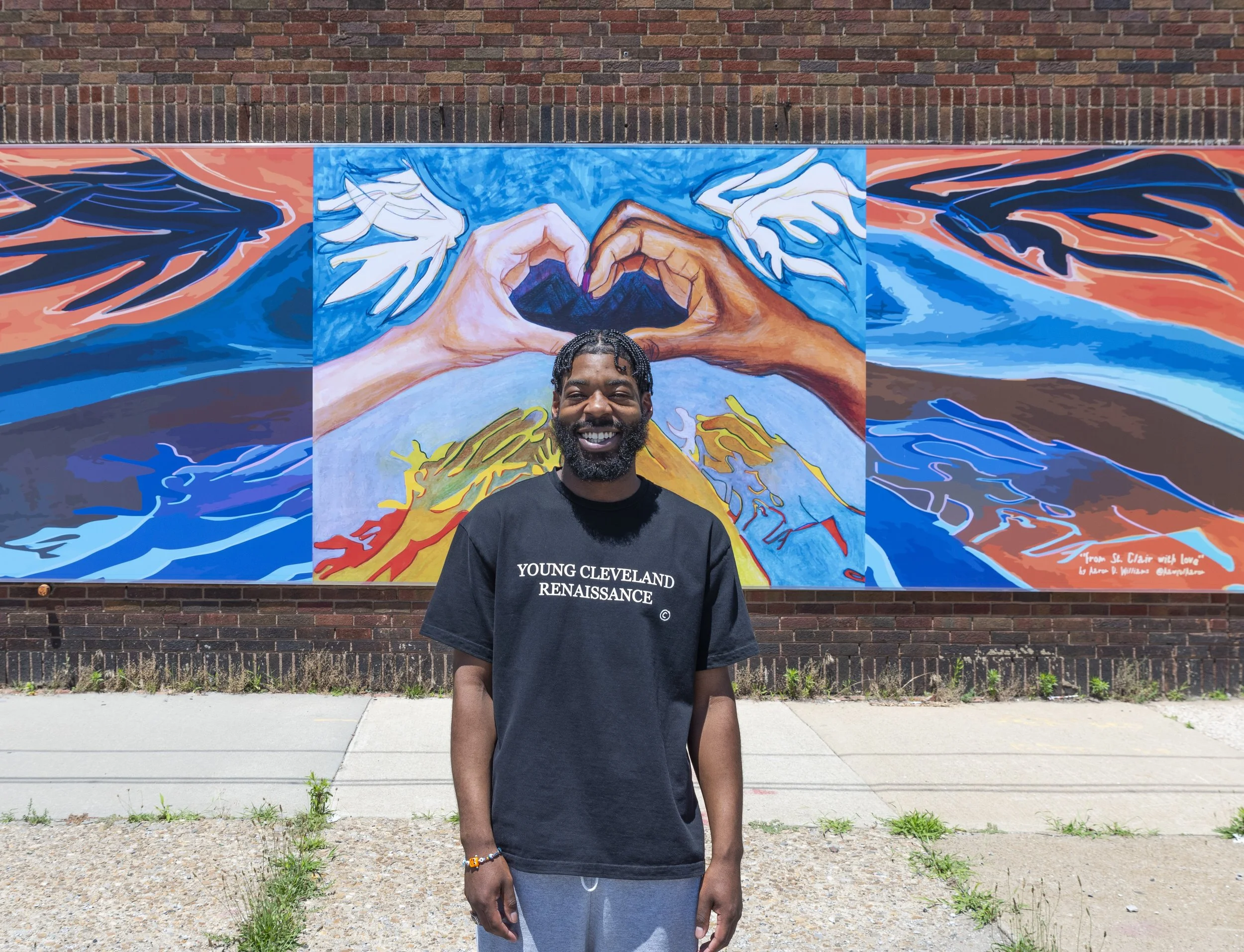
Aawful Aaron
Community Liaison, Zygote Press
@aawfulaaron | aawfulaaron.com
Aaron D. Williams, professionally known as Aawful Aaron, is a Cleveland-based multidisciplinary artist whose practice spans drawing, painting, printmaking, mixed media, public art, and creative direction. Through portraiture, symbolism, and layered visual storytelling, his work examines people, place, identity, and the possibilities that exist beyond everyday life.
Williams has presented solo exhibitions at moCa Cleveland and Summit Artspace, while contributing work to projects and exhibitions with the Cleveland Public Library, FRONT International, LAND studio, and the Ohio Arts Council’s Riffe Gallery. His practice also extends into music, film, fashion, and community engagement.
As founder of Young Cleveland Renaissance and Community Liaison at Zygote Press, Williams works to create stronger connections between artists, institutions, and the broader Cleveland community. Across both his studio and administrative work, he is committed to expanding the resources, visibility, and opportunities available to artists.
How does your work in arts administration influence your studio practice?
How does being an artist shape the way you approach your professional role?
Working in arts administration has made me more structured and disciplined in my studio practice. It has helped me understand that creative work needs infrastructure, planning, communication, resources, and accountability to reach its full potential.
At the same time, being an artist shapes how I approach my professional roles. I bring imagination, adaptability, and a strong sense of vision into the workplace, especially when solving problems or developing new ways to support artists. Because I understand the realities of maintaining a studio practice firsthand, I can advocate for artists from a place of lived experience.
What do you wish more people understood about the work of arts administrators, educators, curators, or cultural leaders?
Everyone has a role to play. I often compare the arts ecosystem to organized sports: people may focus on the player on the court or field, but the game could not happen at that level without coaches, trainers, referees, production teams, and stadium staff. The arts are no different. Artists may be the most visible part of the work, but administrators, educators, curators, and cultural leaders create much of the infrastructure that allows artists and communities to thrive.
What keeps you making art, even while balancing the many responsibilities of your professional life?
Making art is essential to my sense of well-being. I know that when I am not creating, it affects my mental health and how I show up in other areas of my life. Because of that, I treat creative exploration as a responsibility to myself rather than something I do only when I have spare time. Life would be far less fulfilling without it, so I make a conscious effort to honor that need through consistent action.
Davon Brantley
Assistant Director of Alumni Relations and Admissions Outreach,
The Cleveland Institute of Art
@Davon.Brantley | dbrantleyart.com
Davon Brantley, a Cleveland, OH native, graduated with a BFA in Drawing from the Cleveland Institute of Art in 2018. Since then, he has deeply immersed himself in the art community, engaging in teaching, curating, exploring diverse mediums, exhibiting his work, and mentoring emerging artists. Davon is consistently working to shape perceptions of art as a viable and sustainable career path.
In recognition of his contributions and talent, Carta awarded him the 2024 Eterovich Award. This prestigious award, funded by a donation from the family of Anthony Eterovich—an artist and educator who led CIA's children's classes for over 50 years—is presented to exceptional emerging artists with works in carta’s collection. He has also been awarded the Outstanding Visual Artist award in 2026, presented by Summit Artspace.
Brantley has exhibited and curated at significant venues including Bay Arts, the Museum of Contemporary Art in Cleveland, the CAN Triennial, the Morgan Conservatory, the Indianapolis Arts Center, and the Artists Archives of the Western Reserve. He collaborates with local organizations such as the Museum of Creative Human Art and Graffiti HeArt, furthering his printmaking studies through DeepDive Art Projects and the Cleveland Institute of Art. Additionally, he advocates for introducing the arts to younger generations and participates in mural projects.
In his artistic practice, Brantley employs self-portraiture and psychological themes, drawing inspiration from dissociative behaviors resulting from trauma. He explains, “I guide the audience through my own narratives surrounding colorism, racial stereotyping, and meditations on death, life, sexuality, and masculinity. By using my image, viewers encounter someone who may not share their experiences and who actively disrupts identity expectations.”
Through his multifaceted involvement in the art community and his poignant explorations, Davon Brantley inspires and empowers both audiences and aspiring artists alike.
How does your work in arts administration influence your studio practice?
How does being an artist shape the way you approach your professional role?
My work in arts administration has no influence over my studio practice, besides maybe the time I miss in the studio sometimes. Being an artist though has given me a special spot in my role because not only am I able to give families and high schools that I visit perspective on the institution; I also am an example of someone who has somehow maintained a prolific studio practice and maintains a healthy career out of it. It allows me to show people that higher education can give you the tools needed to succeed in the career path you want if you really want to do that.
What do you wish more people understood about the work of arts administrators, educators, curators, or cultural leaders?
I wish people understood the background work a bit more when it comes to these job fields. I will mainly talk about the curatorial and arts administration examples a bit more directly. Not a lot of people know that curators are doing A LOT of leg work to make sure that the exhibit and the artists they are spotlighting are properly highlighted. As a curator taking the time to do studio visits and maintain a good understanding of the work is a lot to process, while also making sure delivery dates, pick up dates, contracts, payment and gallery details are also worked out. It doesn't just stop at "oh, well, I got a bunch of artists and just told the gallery where to hang things" there's programming we make for getting traction to the show, there's private walkthroughs that I take time out of my own schedule to make sure that there's as many eyes as possible get on the piece...there is so much work that goes into this job and not a lot of people see that nor take it seriously. Even in higher education, I travel a lot and I speak to hundreds, if not, thousands of students for months sometimes YEARS depending on when I've met them. Some people think that I have all the time in the world but literally I am on the road for months giving students portfolio reviews and visiting high schools to talk about my work and the importance of higher ed. It's a lot and I wish people knew just how much people are extending themselves to make a better ecosystem for everyone.
What keeps you making art, even while balancing the many responsibilities of your professional life?
If I do not create art, I will literally die. Art is important to me, it has saved me and though that may seem like an unhealthy thing to say... Art was there for me when I felt below my lowest in adolescence. I don't think I will ever lose the momentum to create as it has ingrained itself into my DNA
Jill Eisert
High School Art Teacher, Chagrin Falls Schools
@jilleisertstudio | jilleisert.com
Jill Eisert is an artist and art educator from Twinsburg, OH. For the last twelve years she has been creating and exhibiting artworks delving into mindlessness, an intuitive connection with nature and embracing a sense of playfulness and wonder. She is currently working on the series Wandering Wild, a series of 54 hand drawn illustrations that will published into a meditation card deck to support effortless meditation and somatic awareness.
What do you wish more people understood about the work of arts administrators, educators, curators, or cultural leaders?
There is a misnomer that artists are successful because of talent, which is really just the tip of the iceberg. The large part of the iceberg under the surface viewers cannot see is really the great amount of time dedicated to creating work, and a willingness to embrace failure and a growth mindset.
What keeps you making art, even while balancing the many responsibilities of your professional life?
All art is play and wonder. I don’t force my art making process, and find that my other hobbies greatly influence what I make art about. I love hiking in nature, singing, dancing, meditating, gardening and musical theater. I tend to make multiple iterations of artworks that grow over time to reveal more to the viewer through each iteration. I find that in wandering through all of my passions and integrating them together is where I find happiness and joyful sustainability as an artist.
Hilary D Gent
Gallery Owner and Director , HEDGE Gallery
@hilarydgent | https://hedgeartgallery.com/shop-hilary-gent
Hilary Gent is a Cleveland artist who creates oil and latex paintings inspired by the urban landscape, Lake Erie and other natural water sources in Northeast Ohio. She graduated from Kent State University with a Bachelor's in Fine Art and concentration on painting in 2003. Her paintings are included in public collections such as The Cleveland Clinic, Summa Hospitals, Sherwin Williams, Baker and Hostetler, cARTa and Hilton Hotels Corporation, and numerous private collections.
Gent has spent the last seventeen years curating public art exhibits, launching art walks, and planning elaborate receptions for individuals and organizations, all of which have transformed the way residents and visitors view the Northeast Ohio Region. She was one of the first visionaries to plant roots at 78th Street Studios, where she curates unforgettable art events and exhibitions through her HEDGE Gallery, which now represents a roster of 12 regional artists, and offers extensive art consulting and art installation services.
She has earned awards and grants for her efforts to collaborate with nearby agencies, resulting in programming that has stimulated the entire Gordon Square Arts District. In economic development terms, Hilary’s motivation to present the arts as a vehicle for elevating a neighborhood has provided urban planners with prime elements upon which to build larger community plans.
How does your work in arts administration influence your studio practice?
How does being an artist shape the way you approach your professional role?
I am constantly thinking about the environments my work might be viewed in, and how it can be presented in a gallery setting.
Being an artist myself, I am able to identify with other artists and their studio practices, understanding the juggle of art career and other jobs that they employed in to keep their art making alive.
What keeps you making art, even while balancing the many responsibilities of your professional life?
Making art is my therapy!
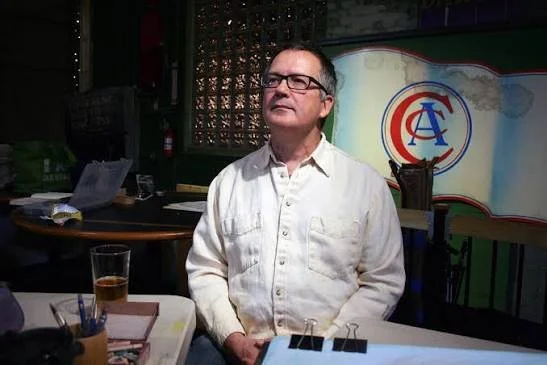
Michael Gill
Executive Director, Collective Arts Network
@Michael_Gill_216 | MichaelGillBooksAndPrints.com
Born and raised in Northeast Ohio, Michael Gill has lived in Washington State, Washington DC, England, Wales, and Ecuador. He came to printmaking as a writer, looking for a way to make books to give stories to his children when they were learning to read. He has had solo shows at WIlliam Busta Gallery and William Busta Projects, BAYarts, Tregoning & Company, and the Massillon Museum, and participated in dozens of group shows. His books are in the special collections of Baylor University, Columbus College of Art and Design,
Otis College of Art and Design, the Bainbridge Island Museum of Art, Buffalo and Erie County Public Library, Fall River Public Library, Graffikwerkstatt Dresden (Germany) and Ediciones Vigia (Matanzas, Cuba), and in private collectons in Germany, France, and the United Kingdom. His career as an arts administrator and journalist led him to found CAN Journal in 2012.
How does your work in arts administration influence your studio practice?
How does being an artist shape the way you approach your professional role?
Being an arts administrator gives me sympathy for the people who support my studio practice in whatever way that happens: the studios that support the work itself, and the galleries that show it. I understand the challenge of maintaining systems and reaching audiences. The same is also true in reverse. Being an artist, I understand the challenge of getting shows, making sales, and trying to find a supportive audience for the work.
What do you wish more people understood about the work of arts administrators, educators, curators, or cultural leaders?
I wish everyone understood that artists and administrators are on the same team, that we are mutually dependent, and that we support each other. Too often, administrators are seen as authorities who consume resources and send rejection. But administrators sustain the systems that give artists a platform, and to do that they have to function in an economy that forces them to raise money, make plans far in advance, and operate within limits.
What keeps you making art, even while balancing the many responsibilities of your professional life?
I enjoy it, and I couldn't stop.
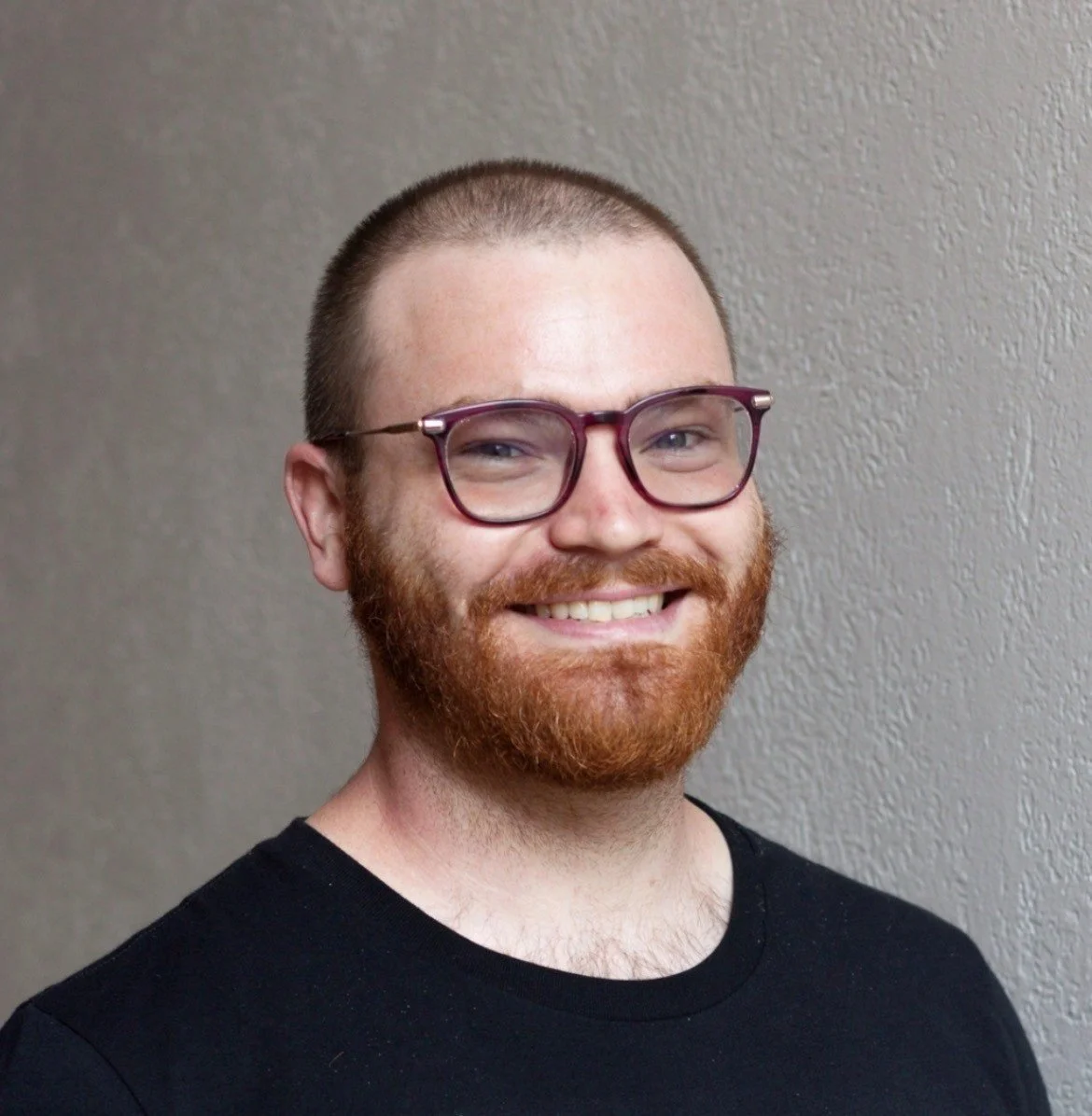
PJ Hargraves
Assistant Professor of Art, Cuyahoga Community College
@Pjhargraves | Pjhargraves.com
PJ Hargraves hails from Philadelphia Pennsylvania and currently teaches Ceramics, 3D Foundations and Sculpture courses at Tri-C East and Metro campuses. PJ earned an MFA from the University of Nebraska-Lincoln and a BFA in Ceramics from the Tyler School of Art at Temple University, along with a K-12 Art Education Certificate. PJ exhibits his work both nationally and internationally and has been an artist in residence at reputable institutions across the globe including in Reykjavik, Iceland and Mangilao, Guam. In addition to teaching classes and workshops for kids and adults, PJ enjoys the labor of the studio, including building and fixing kilns and helping students troubleshoot problems with materials and process. PJ is a passionate gardener and cook and when he is not in the classroom you can often find him at the closest swimming hole.
How does your work in arts administration influence your studio practice?
How does being an artist shape the way you approach your professional role?
My passion for making art is evident in the classroom. My enthusiasm for my medium helps students discover the importance of art and creativity in all aspects of life.
What do you wish more people understood about the work of arts administrators, educators, curators, or cultural leaders?
The arts is a thriving career path! If you are interested in pursuing art as a career there is a place for you.
What do you wish more people understood about the work of arts administrators, educators, curators, or cultural leaders?
Making art reminds me of my love of the practice and reinvigorates my excitement for teaching.
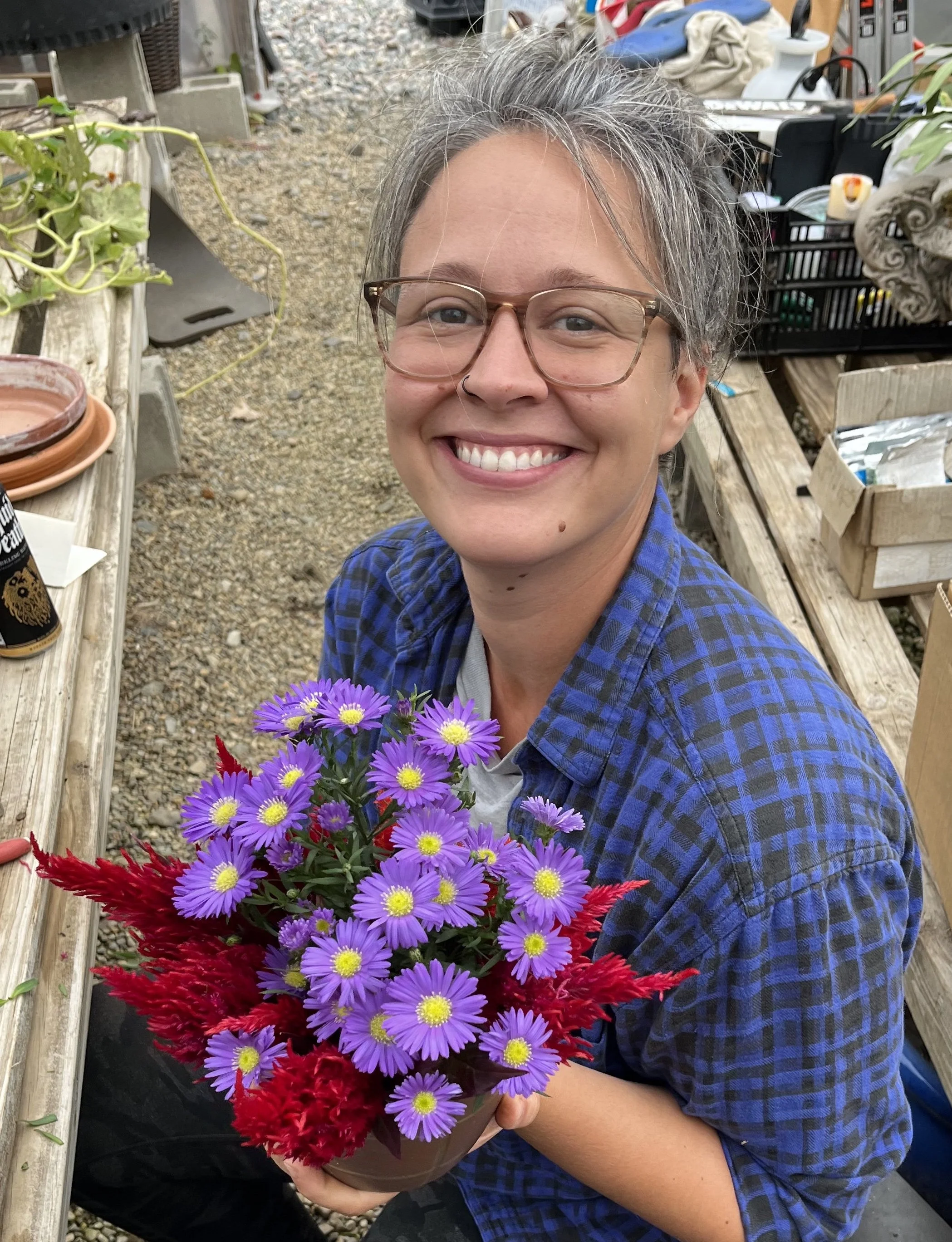
Natalie Petrosky
Part-Time Instructor, Kent State University
Founder & Curator, Please Don't Mow
@roachpatrol | www.nataliepetrosky.com
Natalie Petrosky (b.1989, Akron, OH) is an artist living and working in Cleveland, OH. She received her MFA in Painting & Drawing at the University of Tennessee (2016) and her BFA in Painting with an Honors Thesis in Glass from the School of Art at Kent State University in Kent, OH (2012). She is currently teaching part-time at Kent State University in Kent, OH and works as a gardener in the summers in addition to running an independent project space called Please Don’t Mow. Petrosky makes primarily paintings and drawings, as well as sculptures, videos, and glass.
Natalie most recently was in a group show on display at the Riffe Gallery in Columbus, OH (2026). Some of her other notable exhibitions include: Laughing Through Your Window, Curve Line Space, Los Angeles, CA (2024); sticks, rocks, leaves, Kent State Downtown Gallery, Kent, OH (2024); Wild Bunch, Atlanta Contemporary, Atlanta, GA (2023); The Regional, The Kemper Museum of Contemporary Art, Kansas City, MO (2022); Watching the Seasons Change, Museum of the White Mountains, Plymouth, NH (2022); The Regional, Cincinnati Contemporary Arts Center, Cincinnati, OH (2021); and Something About Windows (solo), The Suburban, Milwaukee, WI (2020).
How does your work in arts administration influence your studio practice?
How does being an artist shape the way you approach your professional role?
My working style is malleable and I bounce off of the personalities and backgrounds of my students and the artists I work with on bigger projects. The people I meet and stay connected with are important to me and ultimately keep me focused, engaged in conceptual conversations, and broaden my ideas about the world. I especially enjoy challenging my students and in turn, being challenged by them.
Being an artist affords me the opportunity to to be open and raw about my own experiences. I can truly say to someone that I know that it is a hard path to take, but persistence can have a pay out if you are open to what that might be.
What do you wish more people understood about the work of arts administrators, educators, curators, or cultural leaders?
That there is a lot going on in the background at all times. I think that being an educator requires a large amount of empathy and an ability to shift thinking to work with so many different personalities. True successful connections feel amazing, but there can also be a lot of dwelling on mistakes due to something trivial like being cranky.
What keeps you making art, even while balancing the many responsibilities of your professional life?
I keep making art because that’s where it all started. It is the most authentic part of me, and it is a basic necessity to stay in touch with it. It also helps me relate to other makers, whether they be my students or my contemporaries. We are all trying to reach for the same thing.
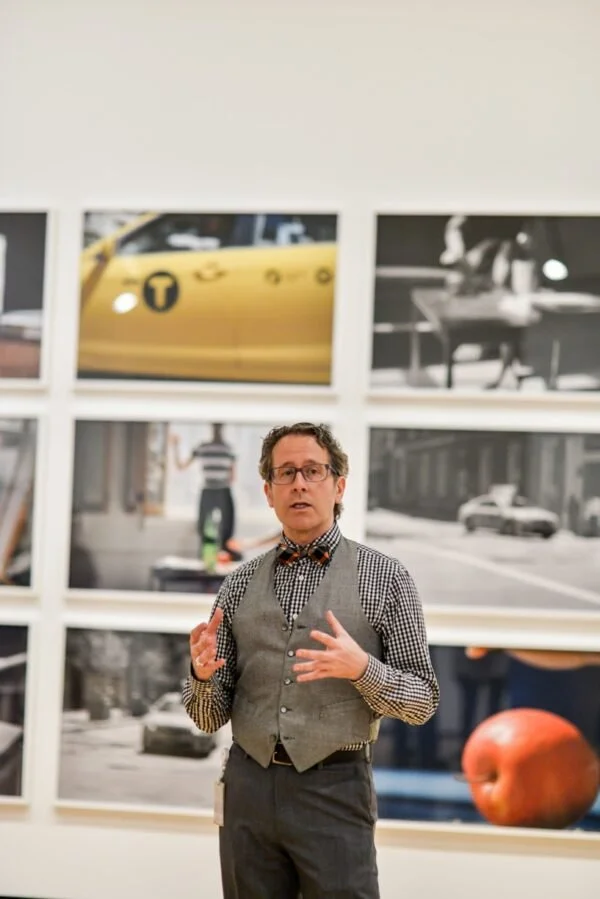
Arnold Tunstall
Director, University Art Galleries, Myers School of Art
The University of Akron | @arnie_photo
Arnold Tunstall is Director, University Art Galleries, Myers School of Art, at The University of Akron. Previously, Tunstall worked for the Akron Art Museum in various curatorial positions since 1985 and served as the Collections Manager and Registrar from 1994 - 2016. Tunstall has also been an active volunteer within the arts community for many years. His volunteer work includes projects with Waterloo Arts Center, Ohio Arts Council, ArtsNOW, Summit Art Space, and NCCAkron as well as service on the board of SPACES Gallery (2006-2020), and as a founding and current board member of Akron Soul Train.
He received his Bachelor of Fine Arts degree from The University of Akron majoring in Graphic Design and Photography, he received his Master of Fine Arts in Photography from The Ohio University. He has been an adjunct instructor at the Myers School of Art since 1995, and the Arts Administration graduate program at The University of Akron since 2014. Tunstall is active throughout the region with curatorial projects and continues to create and exhibit his own photographic artwork. Recent exhibitions have been at Summit Art Space, Curated Storefront, Waterloo Arts, and University of La Verne, CA.
How does your work in arts administration influence your studio practice?
How does being an artist shape the way you approach your professional role?
My administrative work and art making have always influenced each other. Working with the objects created by my peers, students, or masters all have an impact on how I see the world. I am inspired to create my own work as I get to know artists through my job - my eyes are trained everyday by the art I am privileged to engage with.
Being trained as a creative provides the skills to take risks, work on a tight budget and bring creative approaches to my administrative work.
What do you wish more people understood about the work of arts administrators, educators, curators, or cultural leaders?
I wish they knew how hard we all work, this work is full of obstacles at all levels and yet it is filled with the smartest and most passionate folks you will ever encounter.
What keeps you making art, even while balancing the many responsibilities of your professional life?
While it is often difficult to find the time and space to be creative in a busy life, I am continually encouraged to make art by my colleagues and the students I am surrounded by daily. I also find that if I do not indulge in the act of making I am not at my best in my professional life - they feed each other.
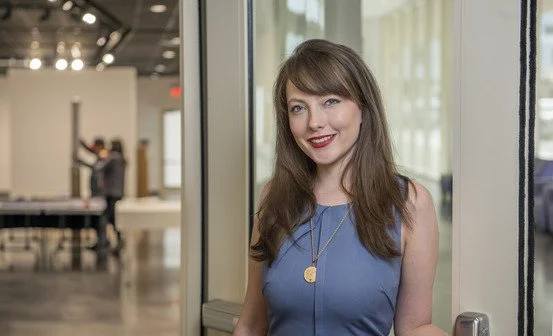
Nikki Woods
Director of Exhibitions + Galleries, The Cleveland Institute of Art
@nikkisixx13 | www.nikkiwoods.com
Nikki Woods is an artist and director of exhibitions and galleries at the Cleveland Institute of Art (CIA). Appointed the director of the Reinberger Gallery in 2018, then director of exhibitions and galleries in 2022, in her roles at CIA Woods has organized numerous ambitious, artist-centered exhibition projects for the college. Woods also programs a free public lecture series titled “Lunch on Fridays,” which features artists, designers and arts workers from a range of fields and backgrounds who provide insight on their work, lives, and professional practices. Additionally, since 2022, she has served as a board member for the Contemporary Art Society, an affiliate group of the Cleveland Museum of Art.
Woods’ paintings have been exhibited in three solo exhibitions at Hedge Gallery in Cleveland: Regrets Only (2017), Vivid Wild Things (2021) and Conjuring Images (2024). Her work has also been exhibited in numerous notable group exhibitions such as Curious Things, Survival Kit (2013); I Came So Far For Beauty, Cleveland State Gallery (2016); No More Tears, Survival Kit (2019); America’s Well Armed Militias, SPACES (2019); and The Regional (2021-22), the Contemporary Art Center, Cincinnati, OH and the Kemper Museum of Contemporary Art, Kansas City, MO. Her work is represented in prominent collections such as the Putnam Collection, Metro Hospital Collection, Progressive Art Collection and the Cleveland Arts Association (CARTA). She holds a BFA in painting from CIA.
How does your work in arts administration influence your studio practice?
How does being an artist shape the way you approach your professional role?
I would say my life as an artist is my greatest strength when it comes to my role as an exhibition director at CIA. I am most engaged when I have the opportunity to solve problems creatively, I also enjoy sharing ideas and working as part of a team. I think most artists intrinsically understand the importance of empathy, human connection and community. I try to bring that care to the work I do with other artists. I value their work and contributions to culture deeply, and understand the potential of what can be accomplished when artists are supported. I think there are a lot of well-meaning people who love and support art, but don’t know how to best support the artists who make it. In my small way, I am attempting to shift that.
What do you wish more people understood about the work of arts administrators, educators, curators, or cultural leaders?
I think that more efforts need to be made to understand and radically support artists and the vital role they serve in free societies. Arts administrators, curators, educators, etc. can provide the conditions, resources and support systems for artists to produce their work and for our communities to then connect with and contextualize that work for our present moment.
What do you wish more people understood about the work of arts administrators, educators, curators, or cultural leaders?
I see making art as part of my identity and how I make sense of the world. When things are at their best, my work at CIA and my painting practice feed each other. What I learn from my work at the college shapes my art, and my art helps to shape my work as an exhibitions director.
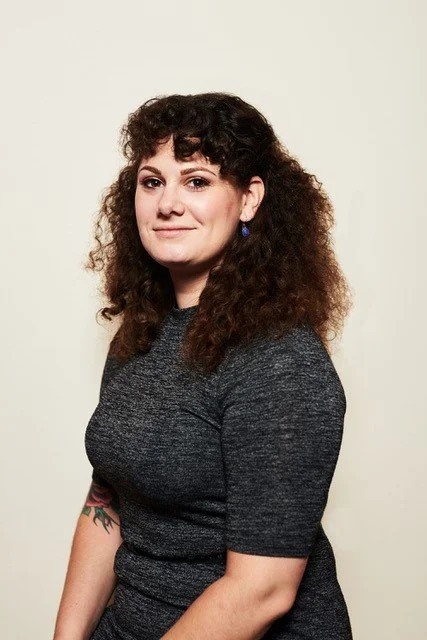
Anna E. Young
Director of Artist Programs and Exhibitions, Summit Artspace
@annaeliz_art | www.annaeyoung.com
Anna E. Young is an artist and arts advocate. She holds an M.F.A. in Photography from Cranbrook Academy of Art and a B.F.A. from the University of Akron, with minors in Printmaking, Art History, and Professional Photography. Young works full-time at Summit Artspace as the Director of Artist Programs and Exhibitions. She taught as an assistant lecturer in the 2D Design and Photography departments at the University of Akron's Myers School of Art for over 3 years. She is the co-founder of KINK Contemporary, an arts organization dedicated to supporting emerging artists and curators, founded in 2019. Young is a self-portrait photographer who creates characters depicted in her fine art photographs, mixed-media prints, and silicone sculptures that explore contemporary social issues, body dysmorphia, trauma, and mortality.
How does your work in arts administration influence your studio practice?
How does being an artist shape the way you approach your professional role?
I truly believe that being able to go home and create after my administrative and curatorial work is finished helps shape positive experiences for our exhibiting artists and the artists we serve. I'm typically dealing with many of the same successes and sometimes struggles they may be encountering. I have gained a wealth of knowledge and resources through the nonprofit work I do. I also believe that when artists are arts administrators, we possess a distinct superpower!
What do you wish more people understood about the work of arts administrators, educators, curators, or cultural leaders?
We put everything into the work we do. I care DEEPLY about the success of the artists I work with. It’s hard, emotional work. There are days when it's difficult to show up for others when we have encountered personal creative blocks, when something personal is going on, etc, but we always try to show up at one hundred percent, because we owe it to them, and at the end of a difficult day, being around creative people who are trying to succeed like us inspires us to push through.
What keeps you making art, even while balancing the many responsibilities of your professional life?
I need to make art for emotional regulation. It's a form of therapy for me. I get to take care of myself when I'm in the studio. It's a great stress reliever. I'm allowed to play and make mistakes. I love the freedom I have when making a body of work!